Truck and bus theory for C and D licences
Truck and bus routes add professional safety expectations, vehicle size, passenger or cargo responsibility, medical checks, and code 95 when driving professionally.
Reviewed against official sources - Updated 2026-05-12
Quick facts
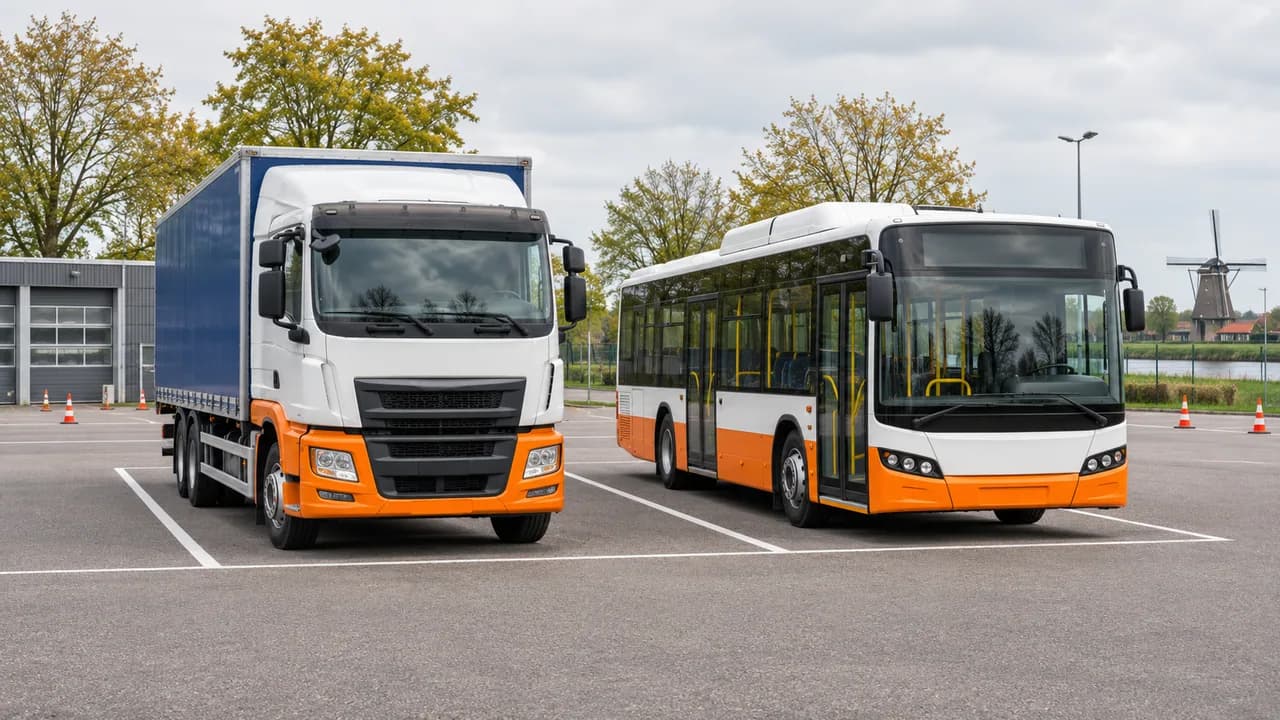
RDW lists C categories for vehicles above 3,500 kg and D categories for buses.
C and D licences are generally valid for 5 years and require a medical check.
CBR distinguishes private use from professional driving with code 95.
D1 is for smaller buses; D is for vehicles carrying more than 8 passengers besides the driver.
Theory focus
Vehicle dimensions, blind spots, turning path, stopping distance, and load or passenger safety.
Tachograph, rest, route planning, environmental zones, and professional conduct where relevant.
Weight limits, axle loads, cargo securing, bus stops, passenger comfort, and emergency procedures.
Code 95 modules if the vehicle will be used for work.
Practice plan
- 1
Choose private or professional route
Decide early whether you need code 95, because it changes the training and exam path.
- 2
Study vehicle scale
Spend extra time on blind spots, mirror use, stopping distance, turning radius, and speed management.
- 3
Separate truck and bus risks
Truck theory leans toward load and vehicle control; bus theory adds passenger safety and service situations.