KNM: Environment & Recycling
The Dutch are environmentally conscious. Waste separation (afvalscheiding) is mandatory: paper, plastic, glass, organic waste, and rest waste go in differ...
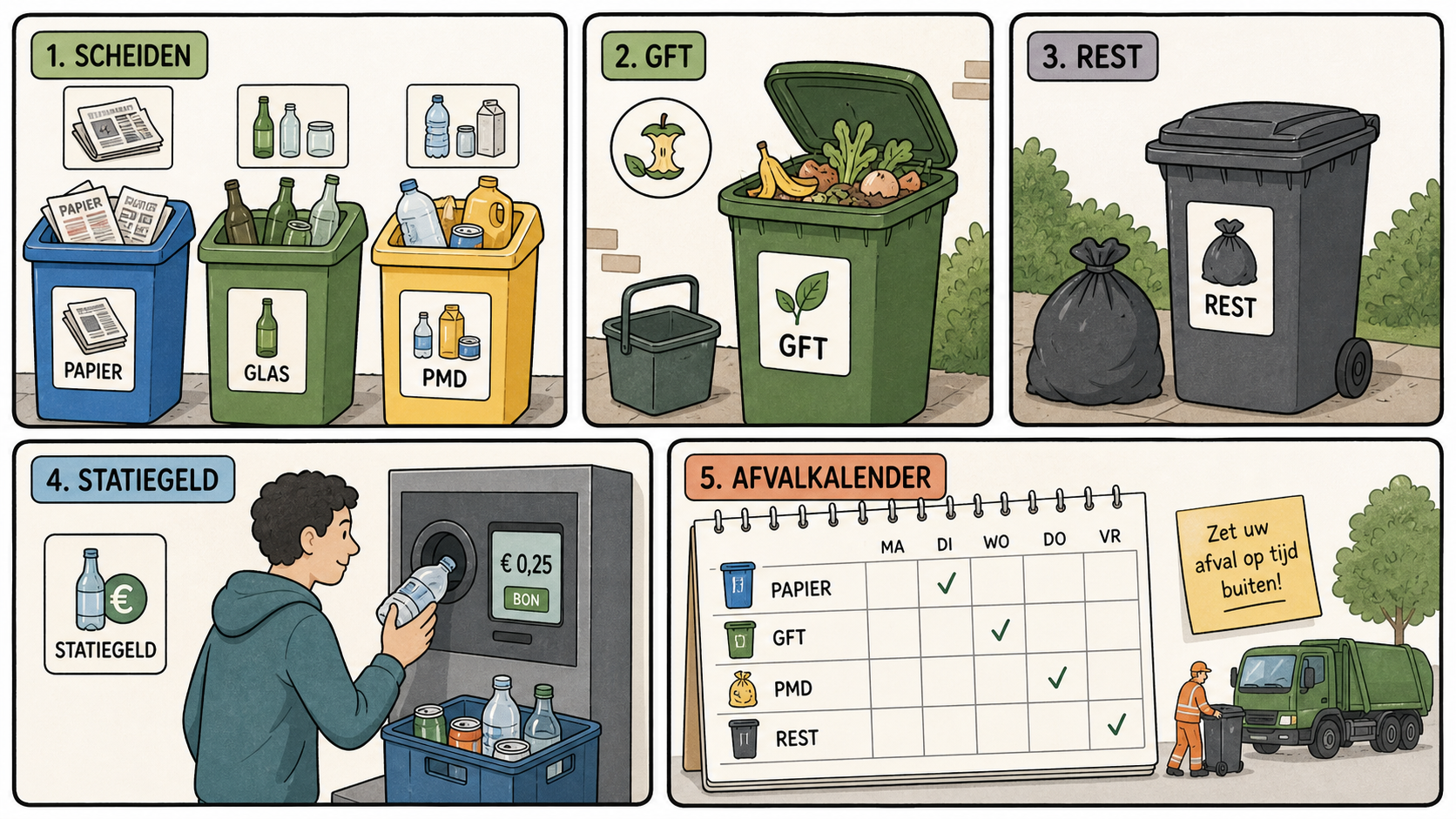
The Dutch are environmentally conscious. Waste separation (afvalscheiding) is mandatory: paper, plastic, glass, organic waste, and rest waste go in different bins or collection points. The 'statiegeld' system means you pay a deposit on bottles that you get back when returning them.
| Waste Type | Dutch | How to Dispose |
|---|---|---|
| Paper/cardboard | Papier/karton | Blue bin or collection point |
| Plastic/metal/drink cartons | PMD | Orange/yellow bin or bag |
| Glass | Glas | Containers by color (clear/brown/green) |
| Organic/food waste | GFT | Green/brown bin |
| Rest waste | Restafval | Grey bin, collected less often |
| Hazardous waste | Klein chemisch afval | Special collection points |
Examples
- Waar gooi ik plastic weg?
- Where do I throw away plastic?
- Deze fles heeft statiegeld.
- This bottle has a deposit.
- De glasbak is om de hoek.
- The glass container is around the corner.
- Wanneer wordt het afval opgehaald?
- When is the waste collected?
Study note
Check your gemeente's waste calendar (afvalkalender) for collection days. Many areas use an app to remind you. Not separating waste correctly can result in fines. Large items (furniture, appliances) require special collection - schedule through your gemeente or bring to a recycling center (milieustraat).
Practice after reading
Train knowledge of Dutch society with timed KNM practice questions.